 ArrowWord Games
ArrowWord Games
ArrowWord Games
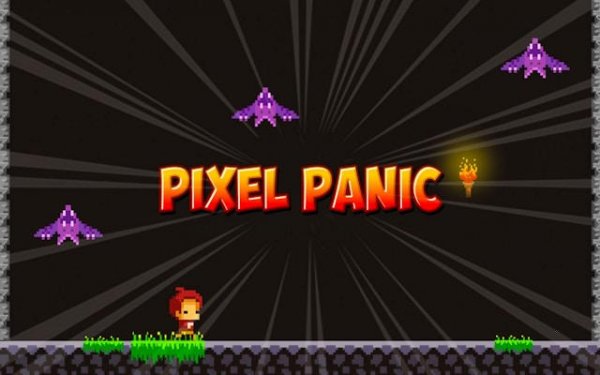
Pixel Panic succeeds by narrowing its scope: one ship, two directions, and a stream of descending enemies. The absence of combat keeps the experience family-friendly and skill-based, while the progressive speed increase ensures that survival time becomes a meaningful measure of improvement. It suits players who enjoy precision challenges and quick sessions, though those seeking varied mechanics or narrative depth will find it intentionally minimal.
Pixel Panic strips arcade action to its core: you move a pixel-art spaceship left and right along the bottom of the screen while bat-like enemies descend from above. There is no shooting, no power-ups, and no combat. The sole objective is to stay alive. Enemy formations follow predictable patterns, but their speed and arrangement shift with each run, so survival depends on reading gaps and committing to smooth lateral movement. One hit ends the attempt, which makes every tap or click feel consequential.
Input is deliberately minimal. Click or tap the left or right side of the screen to nudge the ship horizontally. The game rewards deliberate, gliding adjustments over frantic tapping, because sudden jerks can leave you out of position when a formation tightens. As your survival time increases, the game speed gradually rises, compressing the safe gaps and demanding faster decisions. The control scheme works identically on desktop and mobile, with no downloads or installations required.
Each run begins at a manageable pace, then accelerates in response to your survival. This progressive difficulty is the main source of replayability: the longer you last, the more precisely you must anticipate where gaps will appear. Because enemy patterns and speeds vary between attempts, no two runs play out exactly the same. The result is a short, intense loop that encourages repeated tries, with each failure offering a clear lesson about timing or positioning.
Crisp pixel art and chiptune-style audio reinforce the retro cabinet feel without adding mechanical complexity. The game is designed for quick sessions, making it suitable for players of all ages who want a pure test of reflexes and calm decision-making. A leaderboard may track high scores, though the core appeal remains the personal challenge of lasting a few seconds longer than before. The absence of combat or graphic content keeps the experience family-friendly.
Sign in to comment
You must be logged in before posting a review or rating.
No comments yet. Be the first to comment!








Editorial Notes