 ArrowWord Games
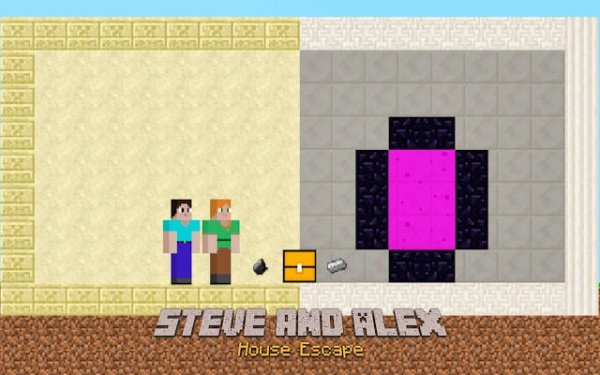
Pixel Puzzle Home Adventure targets players who prefer thinking over reacting. The two-character system gives the cooperative tag real weight, since each role handles different tasks, and the shared inventory keeps both characters relevant. The fire-building goal provides a clear finish line. Its limitation is scope: the input describes a single house, one central objective, and no time pressure, so players seeking action or layered systems may find it too gentle.
Pixel Puzzle Home Adventure puts two playable characters inside a pixel-art house, and the only way out is through cooperation. You can switch between them at any moment. One character collects certain blocks; the other spots small items and handles mechanical puzzles. Progress depends on recognizing which character is suited to the task in front of you, so the game constantly asks you to think about who should act, not just what to click.
Each room is a self-contained puzzle space. You click on objects to interact with them, and anything useful goes into a shared inventory. The design assumes every object has a purpose, so a casual glance rarely solves a room. Careful observation is the real difficulty curve here: the game rewards players who notice how a detail connects to a locked drawer, a stuck mechanism, or a missing component. There is no timer and no penalty for experimenting.
Collecting is only half the work. Items in the inventory can be combined to create new tools, and those tools open up parts of the house that were previously inaccessible. The overarching goal is to gather every component needed to build a fire, which unlocks the path out. That single objective gives the whole game a clear direction: every room you clear should move you closer to a complete set of fire-building materials.
The puzzles emphasize logic and observation rather than speed or reflexes, which makes the game comfortable for short sessions, family play, or two people working through a room together. The cooperative tag is not just a label; the character-switching mechanic means two players can genuinely divide responsibilities. It suits players who want a gentle challenge, and it is less suited to anyone looking for action, time pressure, or complex systems layered on top of the puzzles.
Sign in to comment
You must be logged in before posting a review or rating.
No comments yet. Be the first to comment!





Editorial Notes