 ArrowWord Games
ArrowWord Games
ArrowWord Games
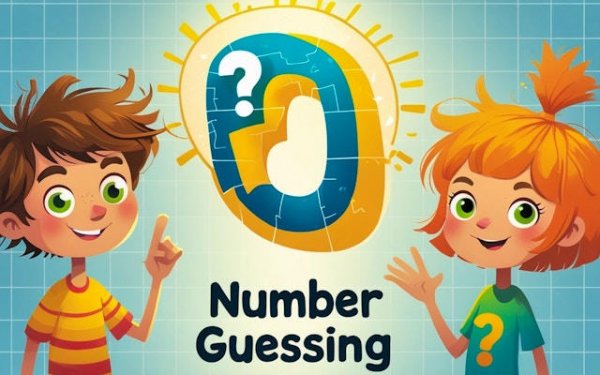
Number Guessing Logic Game does one thing and does it clearly: it turns a simple higher/lower mechanic into a repeatable exercise in binary search. The absence of time pressure makes it approachable for children learning number ranges and for adults who want a brief mental reset. Its main limitation is depth—there is only one puzzle type, so players seeking variety or narrative will find it thin. As a free, instant-play logic drill, it works.
The entire game rests on one loop: submit a whole number from 1 to 100, then read the hint. If the secret number is larger, the game says guess higher; if smaller, guess lower. That feedback is the only information you get, and it is enough to solve the puzzle through pure reasoning. No timers, no penalties, no distractions.
Random guessing wastes attempts. The efficient method is to start at 50, which splits the range in half. If the hint says higher, your next guess should be 75, the midpoint of 51–100. If it says lower, try 25. Repeating this halving process guarantees you find the number in far fewer tries than picking numbers at random. The game tracks your attempt count, so you can see whether your strategy is improving.
The secret number is regenerated every time you play, so memorizing a previous answer does not help. That randomness keeps the puzzle fresh and makes the binary search method the only reliable approach. Because there are no time limits, you can pause and think through each guess without pressure.
Children learning number ranges and the concept of midpoints can practice arithmetic in a low-stakes setting. Adults looking for a quick mental warm-up during a break will find the rounds short and self-contained. The interface is deliberately plain, which keeps attention on the deduction rather than on visuals or sound.
Sign in to comment
You must be logged in before posting a review or rating.
No comments yet. Be the first to comment!







Editorial Notes