 ArrowWord Games
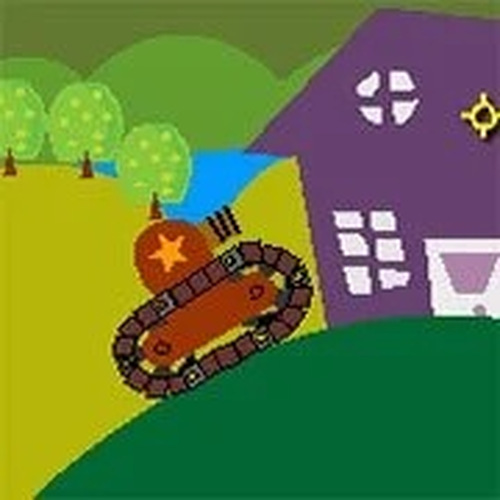
Push & Drive Logic Challenge stands out for its patient approach to puzzle design. The physics interactions feel natural, and the lack of timers encourages thoughtful play. Each new object type keeps the gameplay fresh without adding complexity. The cheerful graphics and simple controls make it a great choice for family gaming sessions or solo relaxation.
At the heart of this experience lies a straightforward concept: players operate a vehicle to interact with objects scattered across each stage. The vehicle responds to directional controls, allowing forward and backward movement along with steering. Objects in the environment react to contact based on their weight and shape, creating a realistic simulation. The goal is to clear a route to the finish marker by nudging, pushing, or rolling obstacles out of the way. This simple loop encourages experimentation with angles and momentum, as each object behaves differently under pressure.
Each stage presents a fresh arrangement of barriers and items to manipulate. Early levels introduce basic shapes like cubes and spheres, while later stages incorporate more complex forms that require careful positioning. The layout often includes narrow corridors, ramps, and elevated platforms that demand precise vehicle handling. Because there are no time constraints, players can pause to study the environment and plan their approach. This design choice removes frustration and allows for creative solutions, such as using a heavy object as a ramp to reach higher areas.
The graphics employ a clean, colorful aesthetic with smooth textures and cheerful tones. Vehicles and objects are rendered in a cartoon-like style that avoids realistic damage or wear. Backgrounds feature simple landscapes with gentle gradients, keeping the focus on the puzzle elements. Animations are fluid, with objects tumbling and sliding in a satisfying manner. The overall presentation feels inviting and non-threatening, making it suitable for younger players or anyone seeking a calming activity.
As players advance, new object types appear, including rolling barrels, stacked crates, and hinged platforms. These additions require adjustments to strategy, such as using speed to knock over a stack or gently nudging a fragile item. The variety ensures that no two levels feel identical, though the core mechanic remains consistent. This gradual increase in complexity helps build confidence without overwhelming the player. The game rewards patience and observation over quick reflexes.
Input methods are designed for immediate understanding. On-screen buttons or keyboard arrows provide responsive control over the vehicle's direction and speed. The interface is minimal, with no cluttered menus or distracting elements. Players can restart a level instantly if they get stuck, and there are no penalties for repeated attempts. This accessibility makes the game approachable for those unfamiliar with complex puzzle titles, while still offering enough depth to engage experienced players.




Player Comments
Sign in to comment
You must be logged in before posting a review or rating.
No account? Create one
No comments yet. Be the first to comment!