 ArrowWord Games
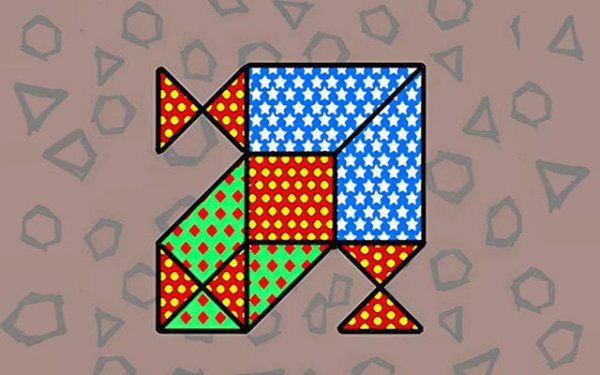
Shape the Shape: Loop Puzzle is a casual logic game built on a clear rule: the number of points in a closed loop determines the resulting shape's color and pattern. The move limit adds a planning layer without introducing time pressure, making it suitable for quick breaks or calm focus sessions. Its family-friendly presentation and progressive difficulty suggest it works for a wide age range, though players seeking complex mechanics or multiplayer features will find it limited. The main appeal is the satisfying link between simple drawing actions and visible pattern outcomes.
Shape the Shape: Loop Puzzle asks you to draw closed loops on a bright 2D grid. You click or tap and drag to connect adjacent nodes, then release to close the loop. The number of points in the loop decides the resulting shape: 3 or 6 points make a green diamond-patterned shape, 4 or 8 points make a red polka-dot shape, and 5 or 7 points make a blue star-patterned shape. That color and pattern system is the game's main feedback loop, letting you see immediately whether your loop matches the target.
Each level shows a set of target shapes and caps how many moves you can make. You cannot simply draw any loop; you need to match the required colors and patterns before your attempts run out. This turns every level into a small planning exercise. Efficient players look at the targets first, then work out which loop sizes will produce the needed shapes with the fewest moves. Because loop size maps directly to pattern, experimenting with different point counts is a practical way to learn the system rather than a random guess.
The game is designed for short sessions, roughly five minutes, but the progressive difficulty means later levels ask for more precise planning. Early targets tend to introduce one pattern at a time, while later combinations require you to create multiple shapes within the move budget. The bright, family-friendly presentation keeps the tone light, so a failed attempt feels like a prompt to try another loop size rather than a harsh setback. There is no timer pressure described, which supports the relaxed, low-stakes feel.
If you enjoy logic puzzles that reward pattern recognition and careful counting, this game fits that niche. It also works for players who prefer creative experimentation over strict optimization, because you can test different loop sizes and observe the results. The controls are simple enough for children, but the move limit adds enough constraint to keep adult puzzle fans engaged. It is best approached as a quick brain warm-up or a calm break between other activities.
Sign in to comment
You must be logged in before posting a review or rating.
No comments yet. Be the first to comment!



Editorial Notes