 ArrowWord Games

Orange Puzzle Lab delivers exactly what its name suggests: light logic challenges wrapped in a bright orange theme. The three puzzle types—slice matching, peel-and-match, and jigsaw—offer enough variety to keep short sessions interesting without demanding deep commitment. The lack of downloads, signups, and timers makes it approachable for families and casual players. Its main limitation is that the input does not describe advanced difficulty settings or progression systems, so players seeking a steep challenge may find it too gentle. As a free browser game for quick mental breaks, it fits its stated purpose well.
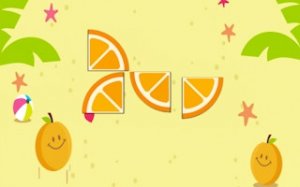
Orange Puzzle Lab bundles three distinct puzzle styles under a bright orange motif. Slice matching asks you to arrange and connect identical orange slices to clear them from the board. Peel-and-match hides elements under orange peel tiles; tapping removes the peel, and you then pair identical items. Citrus jigsaw puzzles use drag-and-drop pieces to complete cheerful orange-themed images. Each type targets a slightly different mental skill, so switching between them changes how you think without changing the setting.
Every puzzle is designed to be completed quickly, which makes the game practical for short breaks. There are no complicated rules to learn, so new players can start in seconds. In slice matching, the board fills with orange slices and your job is to connect matching ones to clear space and progress. In peel-and-match, the hidden element stays unknown until you tap the peel away, adding a memory component. Jigsaw puzzles rely on visual matching and spatial placement rather than pattern recognition.
The game runs instantly in a browser with no downloads or signups. It is mobile friendly, so touch controls work for on-the-go sessions. The content is family safe, and the gentle difficulty makes it suitable for players of all ages. Because there is no rush and no timer pressure described, the experience leans toward a relaxing mental workout rather than a competitive challenge. The variety of puzzle types helps prevent fatigue during longer sessions.
Practicing regularly sharpens the pattern recognition and memory skills the puzzles rely on. Starting with simpler puzzles builds familiarity with each mechanic before you move to harder ones. Careful observation tends to produce better solutions than speed. If you get stuck on one puzzle type, switching to another can refresh your focus and let you return with a clearer eye. The game is best used as a low-pressure break rather than a test of endurance.
Sign in to comment
You must be logged in before posting a review or rating.
No comments yet. Be the first to comment!




Editorial Notes