 ArrowWord Games
ArrowWord Games
ArrowWord Games
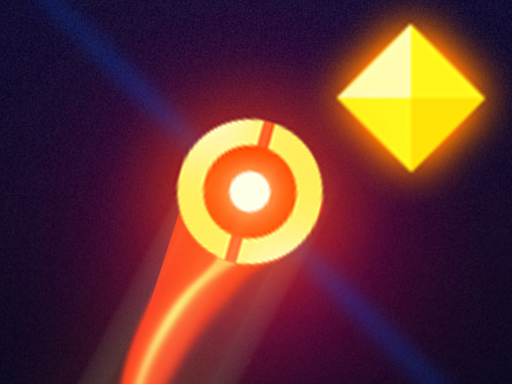
Neon Ball Block Breaker strips its design to one clear loop: a neon ball falls, you break blocks to guide it, and sliding platforms offer second chances. That restraint is the strength. The neon visuals keep the ball and blocks readable, and the endless format means every run ends through a timing mistake rather than a scripted conclusion. It suits players who enjoy quick arcade sessions and hand-eye coordination challenges. The limitation is equally clear: no story, no multiplayer, and no progression beyond score are described, so anyone wanting those should look elsewhere.
Neon Ball Block Breaker centers on a single downward threat: a glowing neon ball descending toward the bottom of the screen. The platform beneath it is made of blocks. If the ball reaches the abyss below, the run ends. Your job is to break the blocks directly in its path so the ball continues falling through gaps rather than landing on solid ground. Each tap or click removes one block, so the decision is not whether to act but which block to remove and when.
Overhead, sliding platforms move across the screen. When the neon ball strikes one, it bounces back upward, buying you extra time to clear more blocks. That creates a two-part rhythm: break blocks to manage the ball's descent, then use a passing platform to reset its height. Floating score icons appear during play. Collecting them raises your total, but chasing them can pull your attention away from the ball, so timing matters as much as accuracy.
There are no complex rules and no fixed level list. Sessions continue as long as the ball stays out of the abyss, which means the game is effectively endless and self-adjusting through your own speed. The tags—reflex, timing, arcade, puzzle, action, casual—describe the loop accurately: quick taps, careful observation, and hand-eye coordination. Short breaks suit it well because a run can end in seconds if concentration slips, but a clean streak rewards the same precision that made it start.
Players who enjoy simple controls with escalating pressure will find the format familiar. The neon visuals are bright but not visually busy, keeping the ball and blocks readable. Anyone expecting story, progression systems, or multiplayer should look elsewhere—the input describes a single-screen arcade challenge built around one mechanic. The appeal is repetition with variation: each run differs because the ball's path and your block choices interact in real time.
Sign in to comment
You must be logged in before posting a review or rating.
No comments yet. Be the first to comment!







Editorial Notes