 ArrowWord Games
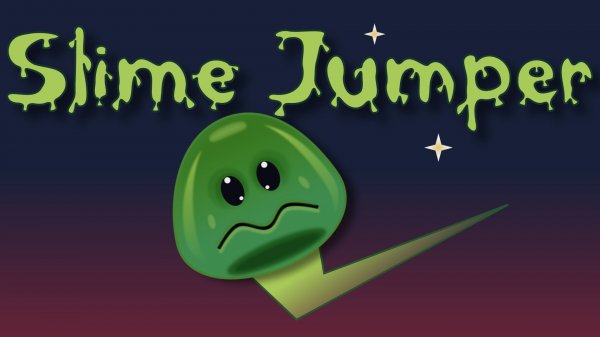
Slime Leap succeeds by refusing to add anything unnecessary. Two jump buttons, a slime that cannot walk, and levels that demand accurate timing create a tight skill loop. The minimalist presentation keeps attention on physics and spacing, while the gradual difficulty curve gives new players room to learn. It suits fans of precision platformers who enjoy replaying levels for cleaner routes. The main limitation is scope: players seeking story, exploration, or varied mechanics will find little beyond the jump.
Slime Leap strips platforming down to one action: the jump. You press one of two buttons to send the slime leaping left or right, and that is the only way it moves. No running, no walking, no mid-air correction. Every gap, ledge, and hazard must be cleared through a single committed leap. That constraint is the whole game, and it changes how you read a level. Instead of reacting on the fly, you study spacing, estimate arc, and commit. A missed jump usually means restarting the attempt, which keeps failure quick and the loop tight.
Early stages introduce the basics with generous platforms and obvious landing spots. Later layouts tighten the margins, placing obstacles so that a hop that is slightly too short or too long ends the run. Because the slime cannot adjust mid-flight, the game rewards players who pause to trace a route before touching a button. Short taps suit cramped sections; fuller presses cover wider gaps. Learning to match jump strength to distance is the core skill the level design quietly teaches.
The control scheme is deliberately small: two jump inputs, plus pause and mute options. Controller support maps jumping and related functions to standard buttons, so the same two-action logic carries over. Visually, the game leans on a vibrant slime character and colorful backdrops against a minimalist layout. Smooth physics and responsive inputs matter here, because precision platforming lives or dies on whether a jump does exactly what the player intended.
Slime Leap targets players who enjoy skill-based challenges rather than story or exploration. The difficulty curve starts gently and climbs through increasingly complex layouts, giving newcomers room to learn while offering veterans a reason to replay for cleaner routes. Sessions can be short, since individual levels are quick to attempt and quick to retry. Anyone who likes the idea of mastering one mechanic to its limit will find the appeal obvious.
Sign in to comment
You must be logged in before posting a review or rating.
No comments yet. Be the first to comment!









Editorial Notes