 ArrowWord Games
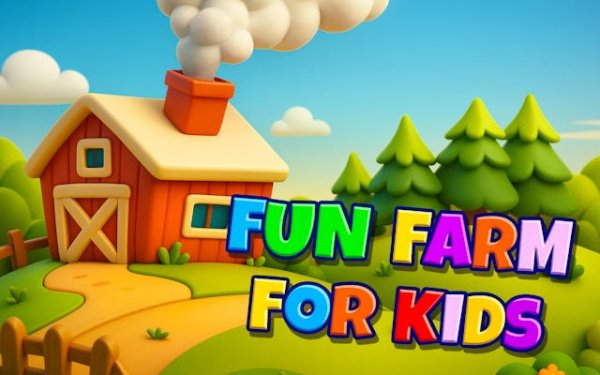
Fun Farm Kids Animal Learning Game keeps its scope narrow and its interface simple, which suits its toddler and preschool audience. The tap-to-hear mechanic gives immediate feedback, helping children connect actions with sounds and build early vocabulary. Parents who want screen time without ads or external links may find it a practical option. The main limitation is depth: the experience is repetitive by design, and older children will likely outgrow it quickly.
Fun Farm Kids Animal Learning Game places toddlers and preschoolers in a colorful farm setting populated by familiar animals such as cows, pigs, sheep, chickens, and ducks. There are no menus, instructions, or text prompts to negotiate. A child opens the game and immediately sees animals ready to be tapped. That absence of setup is the point: the game assumes no reading ability and no prior experience with apps, so the youngest players can participate without an adult guiding every step.
Interaction is limited to a single action: tapping an animal. Each tap triggers the animal's authentic sound alongside a playful animation, such as a duck quacking while it waddles across the screen. Because the response is immediate, children begin to connect their own action with a specific result. That cause-and-effect loop is the core of the learning design. Repeated taps on the same animal reinforce memory, while moving between animals builds early vocabulary for names and sounds. The open-ended structure means a child sets the pace rather than following a prescribed sequence.
The interface avoids complex controls, external links, and advertisements, which keeps the experience contained and predictable. Bright graphics and smooth animations hold attention without overwhelming young viewers. Parents can stay nearby and name animals aloud as their child taps, turning a solo activity into a shared one. The classic farm roster — cows, pigs, chickens, sheep, and similar animals — was chosen because these are the creatures children are most likely to encounter in books, songs, and real life, giving the game a natural bridge to offline learning.
Brief, regular play sessions tend to work better than long ones for this age group. Letting a child explore without direction preserves the sense of discovery that makes the tapping feel rewarding. Repeating the same animals across multiple sessions strengthens retention. Parents can extend the learning by pointing out the same animals in picture books or during a farm visit, connecting what happens on screen to the world outside it. Positive reactions to each tap — a smile, a clap, a spoken animal name — encourage continued curiosity.
Sign in to comment
You must be logged in before posting a review or rating.
No comments yet. Be the first to comment!



Editorial Notes