 ArrowWord Games
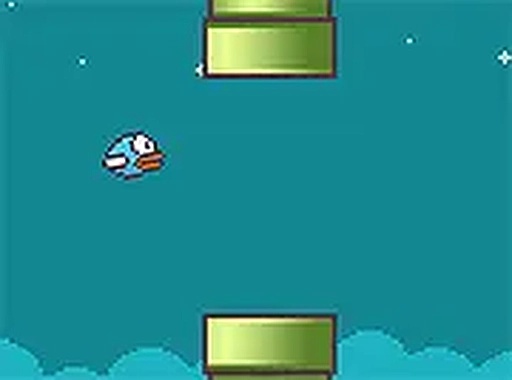
Wing Path Adventure reduces the arcade flight formula to a single input and a clear goal: stay aloft and thread the gaps. The lack of a fixed pattern keeps runs from becoming memorization exercises, and the instant restart supports short, repeatable sessions. Bright visuals and steady browser performance suit players who enjoy skill-based score chasing, though anyone seeking varied modes or story content will find the scope deliberately narrow.
In Wing Path Adventure, the bird's altitude is the only thing you control. A tap or click produces an upward flap; letting go lets the bird sink. The game uses a one-button scheme that reacts immediately, so every decision registers as a small correction rather than a sweeping move. The difficulty comes from staying inside the play area: flap too often and the bird strikes the upper barrier, flap too rarely and it drops out of bounds. There is no separate speed or direction input to manage.
The sky is lined with vertical bars, each broken by an opening at a different height. As a run continues, those gaps can shrink or arrive more frequently, which shortens the time you have to line up the next pass. The layout does not repeat in a fixed order, so memorizing one sequence will not carry you through the next attempt. Success depends on looking ahead and adjusting the bird's height smoothly instead of reacting at the last moment.
Every opening the bird clears adds one point, and the game keeps track of your highest score so you can measure improvement across sessions. Hitting an obstacle ends the run, but the reset is immediate, which keeps the loop tight and makes repeated attempts easy. Bright, cheerful graphics and smooth animations keep the bird and the bars easy to distinguish against the sky, and the desktop browser build is tuned for steady frame rates during longer sessions.
New players tend to over-flap, which drives the bird into the top barrier. Gentle, evenly spaced taps hold a steadier height. Rather than watching the bird itself, shift your attention to the next gap and anticipate where it sits. A calm, consistent rhythm usually produces better scores than fast reactions alone, and a few practice rounds help you internalize the timing before you chase a high score.
Sign in to comment
You must be logged in before posting a review or rating.
No comments yet. Be the first to comment!







Editorial Notes