 ArrowWord Games
ArrowWord Games
ArrowWord Games
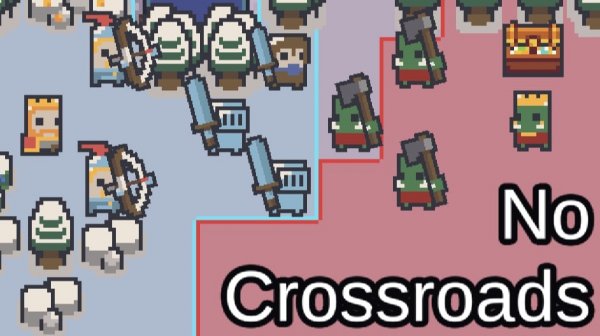
Settlement Command Tactics offers a measured, turn-based approach to settlement building. The scarcity of wood and food forces meaningful trade-offs between housing, storage, and expansion. Unit roles and experience add personal investment, while the absence of time pressure makes it accessible to players who prefer analysis over reflexes. The clean control scheme and free online access lower the barrier to entry. However, the game does not specify exact numbers of units or skill trees, so depth may vary. Best suited for fans of turn-based strategy and resource management.
Settlement Command Tactics tasks players with turning a small group of survivors into a functioning island colony. The environment provides only the essentials, so every structure and resource collection matters. Wood and food drive early progress; each new building unlocks additional capabilities. Players must choose between housing for more workers or storage for surplus goods. That constant trade-off between immediate needs and future capacity shapes the core loop.
Unlike real-time strategy games that demand fast reflexes, Settlement Command Tactics rewards patience. Each turn is a self-contained puzzle: move units, gather materials, construct facilities. No timers force hasty choices. A well-planned turn might send one team to collect timber while another reinforces a vulnerable perimeter. The turn structure suits players who prefer analysis over clicking speed.
Claiming new island areas unlocks additional resources, but expansion carries risk. Spreading too quickly leaves established zones underprotected. The game encourages securing one area before pushing into the next. New territories may contain valuable deposits or strategic advantages. Reading the land becomes a key skill, since certain positions offer natural defenses or proximity to multiple resource nodes.
As the settlement grows, players assign different roles to community members. Some units gather supplies more efficiently; others protect the colony. Over time, these characters gain experience and become more effective at their tasks. This progression adds personal investment, as players rely on their seasoned veterans. The game does not specify exact numbers of units or skill trees, but improving individual capabilities is central to the experience.
Limited resources define much of the challenge. Players cannot build everything at once and must prioritize. A food shortage might force workers away from construction and into gathering. A lack of wood can halt building projects entirely. Scarcity demands creative solutions and tough trade-offs. Adapting to changing conditions matters more than following a rigid plan.
The interface is designed for straightforward interaction. On a computer, the camera moves with standard WASD keys, and ending a turn is as simple as pressing E. Mobile users can tap to select units and issue commands. This clean control scheme keeps the focus on strategic planning rather than struggling with complicated inputs. The game is free to play online, removing any barrier to entry for those curious about turn-based strategy games.
Sign in to comment
You must be logged in before posting a review or rating.
No comments yet. Be the first to comment!





Editorial Notes