 ArrowWord Games
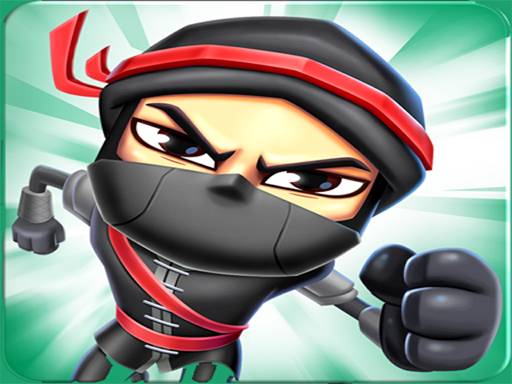
Ninja Dash Arcade Race leans on a simple loop: run, jump, smash, and try to finish ahead of other players. Its strengths are the short match length, the family-friendly presentation, and the way breakable barriers turn obstacles into tactical choices. The main limitation is that the input does not describe progression, character depth, or track count, so players seeking long-term unlocks or a single-player mode should check those details before committing.
Ninja Dash Arcade Race is a real-time multiplayer racing game where the goal is simple: finish each obstacle course faster than everyone else. You control a nimble ninja and compete against other players in live matches. Races are short, so you can jump in for a quick session or chain several runs together. Your finishing position determines your rank, which means every second spent recovering from a fall or a bad jump directly costs you places.
Your toolkit is small but expressive. You run forward automatically through the course, jump over obstacles that would otherwise stop you, and smash through breakable barriers to keep your momentum. The smash mechanic is the most interesting part: barriers are not just hazards to avoid, they are shortcuts that reward players who recognize which ones can be broken. Missing a jump or getting stuck forces you to restart your run, while opponents stream past. That risk-reward tension between careful jumping and aggressive smashing shapes every race.
Each ninja character may have unique traits, which adds variety to how a race plays out. The input does not specify how many characters exist or what each trait does, so treat character selection as a way to find a ninja whose handling matches your preferred style rather than a deep customization system.
The game uses a vibrant, Japanese-inspired setting with colorful graphics. It is designed to be family-friendly, with no violence or inappropriate content, making it suitable for younger players and casual groups. The bright presentation and short match length keep the focus on reflexes and track knowledge rather than on story or progression systems.
Because courses are fixed, repeated runs teach you the timing of each jump and the location of breakable barriers. Players who memorize a track's rhythm tend to outperform those who react purely on instinct. Watching opponents ahead of you can also reveal routes or smash opportunities you might have missed. Precision usually beats raw speed, especially on sections where a mistimed jump costs more time than a cautious approach.
Sign in to comment
You must be logged in before posting a review or rating.
No comments yet. Be the first to comment!






Editorial Notes