 ArrowWord Games
ArrowWord Games
ArrowWord Games
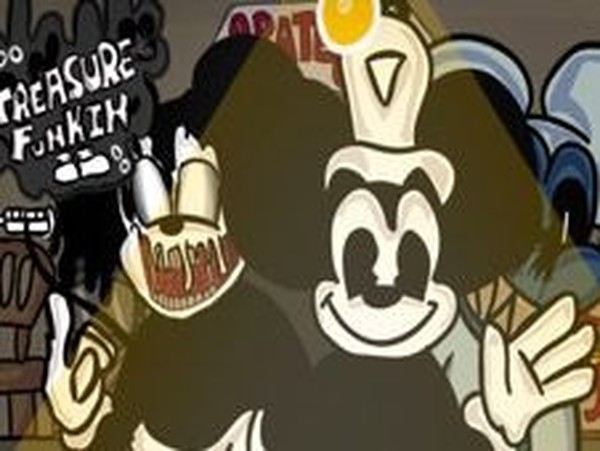
Treasure Island Rhythm Challenge keeps its scope tight: press arrow keys in time with the music, avoid consecutive misses, and progress through a story or practice freely. The island theme and original soundtrack give it a distinct identity, while the two-mode structure supports both casual practice and narrative progression. It suits players who want an accessible timing challenge without complex controls, though the miss limit may frustrate those still learning a song.
Treasure Island Rhythm Challenge casts players as Boyfriend, a character who faces a friendly musical duel against an opponent inspired by Mickey Mouse. The setting is a tropical island, and the core loop is straightforward: arrow symbols appear above the character, and players must press the matching arrow key at the exact moment the note lands. [IMG_1] Accuracy is tracked continuously, and consecutive misses are counted. If too many notes are missed in a row, the song ends and must be restarted. This fail-state keeps tension high without punishing every single mistake.
The game splits into story mode and free play mode. Story mode follows a narrative, giving each song a context within the island adventure. Free play mode lets players practice any unlocked song without narrative pressure. That structure supports both players who want progression and those who prefer to drill a single track until the timing feels natural. [IMG_2]
Success depends on listening to the music and watching the arrow prompts simultaneously. The controls are limited to the arrow keys, so there is no complex input layer to learn. What matters is timing: hitting notes perfectly, staying relaxed, and avoiding rushed inputs. Players who struggle with a song can break it into smaller sections or, if a slower speed setting is available, use that to learn the pattern before returning to full tempo.
The soundtrack consists of original music inspired by the Treasure Island theme. Catchy tunes and the island backdrop give the game a lighthearted tone that suits players of all ages who enjoy music and coordination challenges. The visual focus stays on the arrow prompts and the two characters, keeping the screen readable during fast sections.
Sign in to comment
You must be logged in before posting a review or rating.
No comments yet. Be the first to comment!







Editorial Notes