 ArrowWord Games

FNF Mario Rhythm Battle delivers what its name promises: arrow-key rhythm battles against Mario, wrapped in colorful visuals and catchy music. The two-mode structure is its strongest practical feature. Story mode gives the songs a sequential context, while free play supports the repetition that rhythm games demand. The main limitation is inherent to the format: if you dislike note-matching or FNF-style mods, the Mario theme alone won't change that. For fans of music and rhythm games, it's a straightforward, well-scoped addition.
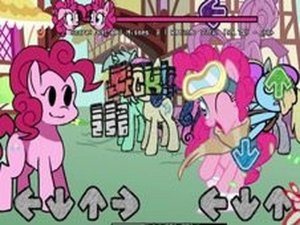
FNF Mario Rhythm Battle is a Friday Night Funkin mod centered on timing-based music combat. The screen shows floating arrow symbols that appear above a character on the right side. Your job is to press the matching arrow keys on your keyboard as those notes arrive. Each successful hit maintains your health bar; too many misses in a row drain it, and an empty bar ends the song. The core challenge is timing rather than speed alone, so listening to the beat is as important as watching the arrows.
The mod splits its content into two modes. Story mode presents multiple chapters, giving the battles a sequential structure and a sense of progression through the track list. Free play mode removes that structure and lets you select individual songs for repeated practice. That distinction matters: story mode is better for following the mod's intended order, while free play is more practical when a specific note pattern keeps tripping you up.
Each song in the mod has its own note pattern, so the challenge changes from track to track rather than repeating one rhythm with different music. Colorful visuals and catchy tunes support the battles and help keep attention on the arrow lane. Because the patterns are song-specific, learning a track means memorizing its sequence of arrows, not just reacting faster.
Improvement comes from repetition. Starting with easier songs in free play builds the timing and hand-eye coordination needed for harder patterns. Watching the center of the screen helps you see arrows approaching from both sides instead of fixating on one edge. Taking breaks when frustration sets in is practical advice, not filler: rhythm games punish tense, rushed inputs more than slow ones.
Sign in to comment
You must be logged in before posting a review or rating.
No comments yet. Be the first to comment!

Editorial Notes