 ArrowWord Games
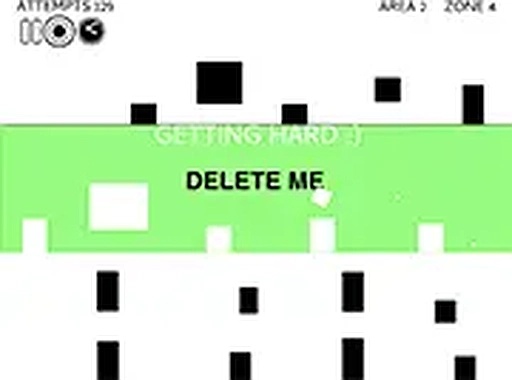
Monochrome Jump Platformer succeeds by removing distractions. The black-and-white art reduces eye strain and keeps attention on each jump, while the difficulty curve moves from simple barriers to patterns that require exact timing. Cross-device support and automatic saving make it easy to practice in short sessions. Local multiplayer adds a social layer without online infrastructure. The main limitation is variety: if you do not enjoy repeating a level until the timing clicks, the game offers little else. It suits patient players who treat failure as information.
Monochrome Jump Platformer strips away everything except the jump. You control a character moving through levels filled with gaps and blocks, and every obstacle is cleared with a single tap, click, or key press. There is no run button, no power-up, and no combat. The only question each level asks is whether you can time one jump correctly. That narrow focus makes the game easy to start but difficult to finish, because a jump that is slightly early or late ends the attempt.
Early stages teach the basic rhythm of jumping over simple barriers. Later patterns demand precise movements and tighter timing windows, but the game avoids unfair spikes. The difficulty curve keeps players engaged without feeling unfair, so progress comes from learning obstacle patterns rather than luck. [IMG_1] Each new challenge builds on the previous one, and the minimalist design ensures smooth performance on all devices.
The game runs on mobile phones, tablets, and desktop browsers. On mobile, touch controls provide instant response. On desktop, players click with a mouse or press a key. Progress saves automatically, so you can stop mid-level and continue from where you left off. That cross-device support means the same save file follows you from a phone commute to a desktop session.
Local multiplayer allows friends to take turns on the same device and compare completion times. There is no online matchmaking or networked play. Instead, the competition is direct: one player finishes a level, hands over the device, and the next player tries to beat that time. [IMG_2] This turn-based structure suits the game's short, repeatable levels and gives the minimalist format a social layer without adding visual clutter.
Sign in to comment
You must be logged in before posting a review or rating.
No comments yet. Be the first to comment!






Editorial Notes